Beyond Certification: Why CPR Training in Louisville Matters
Posté le 18/06/2026

Healthcare professionals and everyday citizens alike understand the critical importance of life-saving skills. Medical emergencies can happen at any moment, whether in a hospital setting, a local business, or right at home. When seconds count, having the right training can make the ultimate difference between life and death. That is why finding high-quality CPR Training in Louisville is absolutely essential for anyone looking to be prepared for the unexpected. Whether you are a seasoned medical professional needing to renew your credentials or a concerned bystander wanting to learn basic life support, obtaining certification through recognized programs ensures you are learning the most current, evidence-based techniques. In this guide, we will explore the various levels of certification available, from basic life support to advanced courses, so you can choose the right educational path for your career and personal goals.
Why Life-Saving Skills Matter in the Bluegrass State
Louisville is a bustling city with a growing population, world-class medical facilities, and a strong sense of community. With a vibrant healthcare sector, the demand for certified professionals is always high. However, the need for life-saving skills extends far beyond the hospital walls. Cardiac arrest can strike anyone, regardless of age or apparent health status. By participating in comprehensive CPR Training in Louisville, individuals empower themselves to act decisively during a crisis.
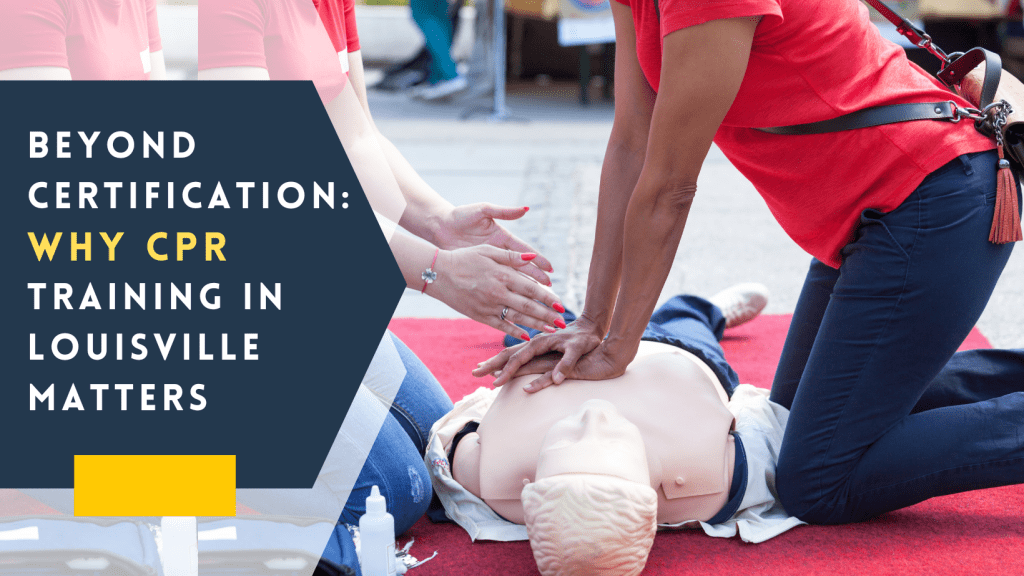
Immediate chest compressions and rescue breaths can double or even triple a victim's chances of survival before emergency medical services arrive. Furthermore, local training centers provide hands-on practice with manikins and automated external defibrillators (AEDs), ensuring that participants build the muscle memory necessary to perform under intense pressure. When you train locally, you also benefit from a curriculum tailored to regional emergency response protocols, making your skills highly relevant to the community you serve.
American Heart Association BLS: The Foundation of Care
For anyone entering the healthcare field, the American Heart Association BLS (Basic Life Support) certification is the fundamental starting point. This course is meticulously designed for nurses, doctors, emergency medical technicians, and other healthcare providers who need to respond to cardiac emergencies. It focuses on the core skills required to recognize life-threatening emergencies, provide high-quality chest compressions, deliver appropriate ventilations, and use an AED safely and effectively.
The American Heart Association BLS curriculum emphasizes the importance of the chain of survival, which includes early recognition, early CPR, and rapid defibrillation. During the course, participants practice these essential techniques both individually and as part of a resuscitation team. The training highlights the critical nature of minimizing interruptions in chest compressions and ensuring proper hand placement and depth. By mastering these foundational skills, healthcare workers create a strong baseline that supports more advanced medical interventions down the line. It is a mandatory credential for most clinical positions and serves as a prerequisite for many advanced medical courses.
American Heart Association ACLS: For Advanced Cardiovascular Care
Building upon the solid foundation of basic life support, the American Heart Association ACLS (Advanced Cardiovascular Life Support) certification takes medical training to a significantly higher level. This advanced program is specifically tailored for healthcare professionals who either direct or participate in the management of cardiopulmonary arrest and other severe cardiovascular emergencies.
The American Heart Association ACLS course delves deep into the pharmacological interventions, advanced airway management, and complex algorithms necessary to treat patients in critical condition. Participants learn how to read electrocardiograms (ECGs) to identify specific arrhythmias and determine the appropriate medications to administer. The curriculum places a heavy emphasis on team dynamics and clear communication, as advanced resuscitation requires seamless coordination among multiple medical providers. Through simulated megacode scenarios, clinical staff practice their roles in a high-stress, controlled environment. This ensures that when a real code blue occurs, the team can execute their duties efficiently, confidently, and without hesitation.
American Heart Association PALS: Focusing on Pediatric Emergencies
Pediatric emergencies require a unique set of skills and a completely different approach compared to treating adults. The American Heart Association PALS (Pediatric Advanced Life Support) certification equips healthcare providers with the specialized knowledge needed to respond to critically ill infants and children. This course focuses on the systematic approach to pediatric assessment, utilizing the evaluate-identify-intervene model to quickly recognize and treat life-threatening conditions.
The American Heart Association PALS curriculum covers critical topics such as respiratory distress and failure, shock, and cardiac arrest in the pediatric population. Because children are anatomically and physiologically different from adults, the training emphasizes age-specific drug dosages, the proper use of pediatric-sized equipment, and the delicate airway management techniques required for smaller patients. Providers learn to perform effective bag-mask ventilation, high-quality chest compressions, and how to safely use an AED on a child or infant. By engaging in realistic pediatric simulation scenarios, healthcare teams improve their ability to deliver high-quality care during the most emotionally charged emergencies.
What to Expect During Your Certification Course
When you sign up for these essential medical courses, you can expect a rigorous but highly rewarding educational experience. Modern certification programs blend cognitive learning with extensive hands-on skills practice. You will spend time reviewing updated course materials, watching instructional videos, and participating in guided discussions. However, the majority of your time will be dedicated to practical application.
You will work directly with training manikins to perfect your compression rate and depth, practice rescue breathing, and simulate the use of automated defibrillators. Evaluation typically involves a written exam to test your theoretical knowledge and a practical skills test where you must demonstrate your competency in various emergency scenarios. Upon successful completion, you will receive a course completion card that is valid for two years. It is highly recommended to review the pre-course materials thoroughly before attending, as the curriculum is fast-paced and packed with vital, life-saving information.
Staying Current with Your Credentials
Medical science is always evolving, and emergency cardiovascular care guidelines are updated periodically to reflect the latest scientific research. This is why certifications expire after two years. Renewing your credentials ensures that you are always practicing the most effective and safest techniques available. Recertification courses are generally shorter than initial certification courses but cover the same critical material. They serve as an excellent refresher for seasoned professionals who may not perform these skills on a daily basis. Staying current with your certifications is not just about fulfilling an employer's requirement; it is about maintaining the confidence and competence needed to save a life. Regular practice and recertification are necessary to keep your skills sharp and ensure you are ready to act when an emergency arises.
Conclusion
Investing in life-saving education is one of the most impactful decisions a person can make. Whether you are seeking to fulfill a professional requirement or simply want to be prepared to save a loved one, pursuing high-quality education is a step in the right direction. By enrolling in CPR Training in Louisville, you join a community of individuals dedicated to safety, health, and mutual support. From the foundational skills taught in the American Heart Association BLS course to the advanced techniques found in American Heart Association ACLS and American Heart Association PALS programs, each level of certification builds upon the last, creating a comprehensive skill set. Equip yourself with the knowledge and confidence to act during an emergency, and you could be the one to make a life-saving difference when it matters most.